


I'm a Node.js & TypeScript engineer focused on backends and distributed systems that hold up in production. I've architected platforms on GCP, Alibaba Cloud, and AWS, run self-hosted infra, shipped frontends in React and React Native, and led engineering teams through recovery, compliance audits, and greenlight-to-production speedruns.
Day to day that means the Node.js ecosystem: NestJS services with CQRS and event sourcing, PostgreSQL and MongoDB, Redis for caching and rate limiting, RabbitMQ / Kafka / NATS for messaging, and test suites that actually run in CI. I care about tenant isolation, typed error handling, and event-driven flows you can replay when things go wrong.
Lately I've also been deep in AI-native engineering: coding agents, multi-agent systems, agent harnesses, and the verification layer that makes AI reliable enough for real engineering work, not demos. Still close to the code either way.
Production-oriented Nx + pnpm monorepo starter. NestJS API with CQRS, multi-tenant guards, and a transactional outbox that publishes to Kafka (dead-letter queue + replay included), Next.js web and admin apps, an Expo mobile app, and 22 shared packages: auth, encryption, queues, storage, OPA policies, observability. Full local stack on Docker Compose (PostgreSQL, Redis, Kafka, MinIO, MailHog) and a real test pyramid: Jest units, Testcontainers e2e, Playwright.
Two dockerized microservices, two MongoDB instances, Redis, and NATS for inter-service messaging.
NestJS API and a background worker talking over RabbitMQ, backed by MongoDB.
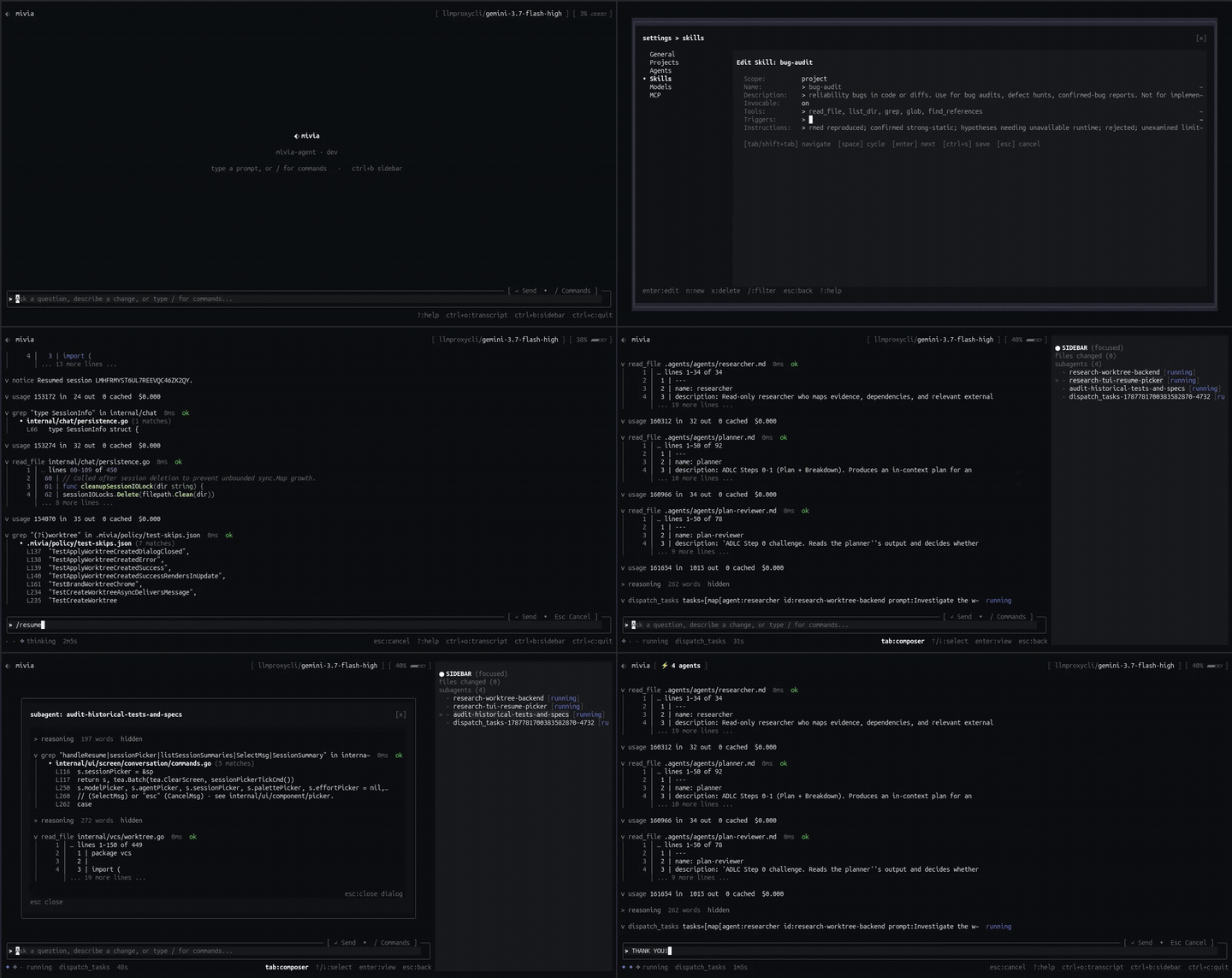
A terminal coding agent that actually ships code. It reads, searches, and edits your repo, runs your test suite, and drives multi-step workflows in an isolated worktree with a durable run record for every step. Local-first and provider-agnostic: your files stay on your machine, and you bring the model.
A Go SDK for building reliable AI agents and multi-agent workflows out of composable, single-concern blocks. Ed25519-signed envelopes, durable task execution with fenced takeover, deterministic step graphs, and native MCP/A2A protocol support. Standard library only, no dependency surface to audit.